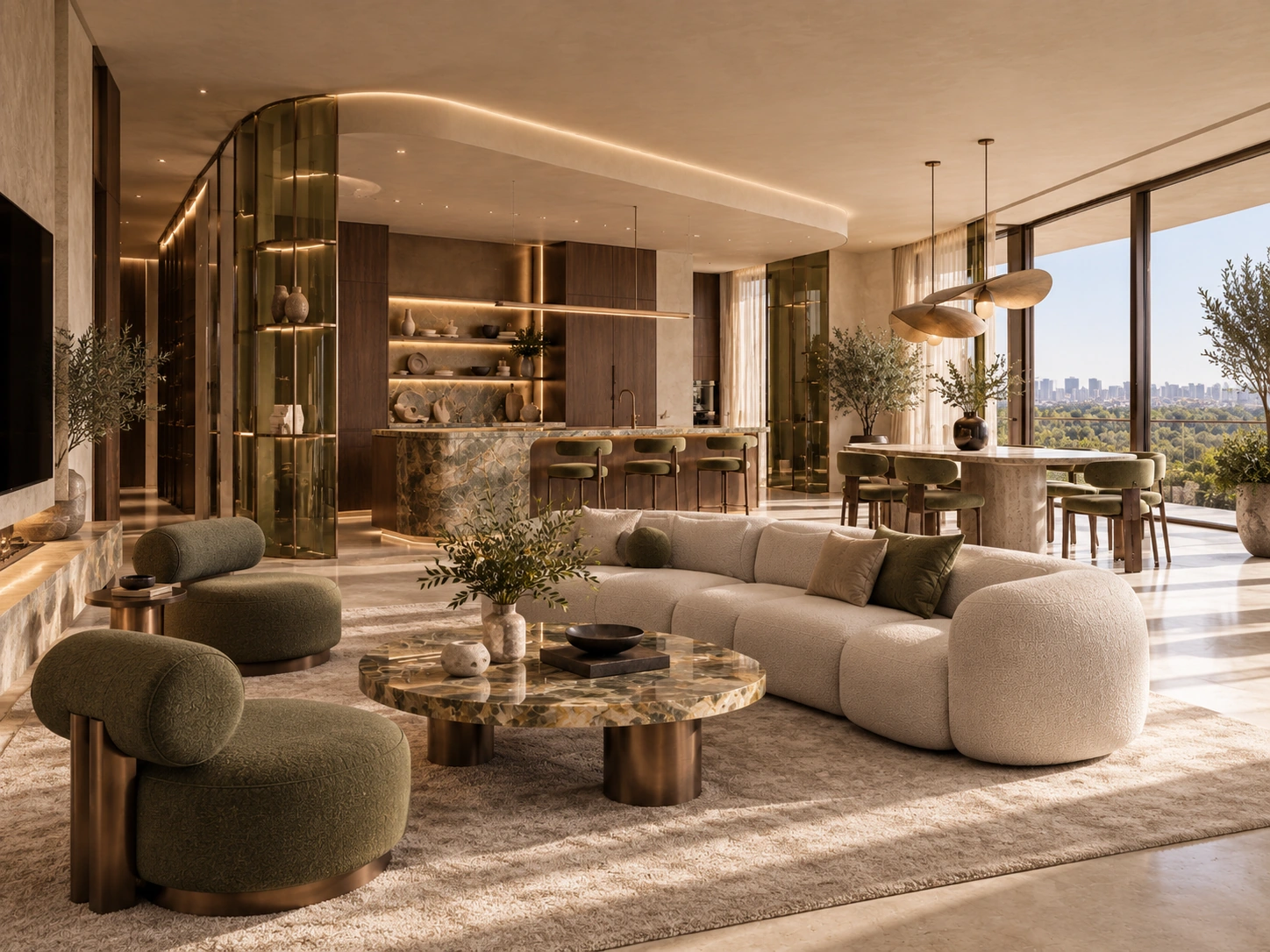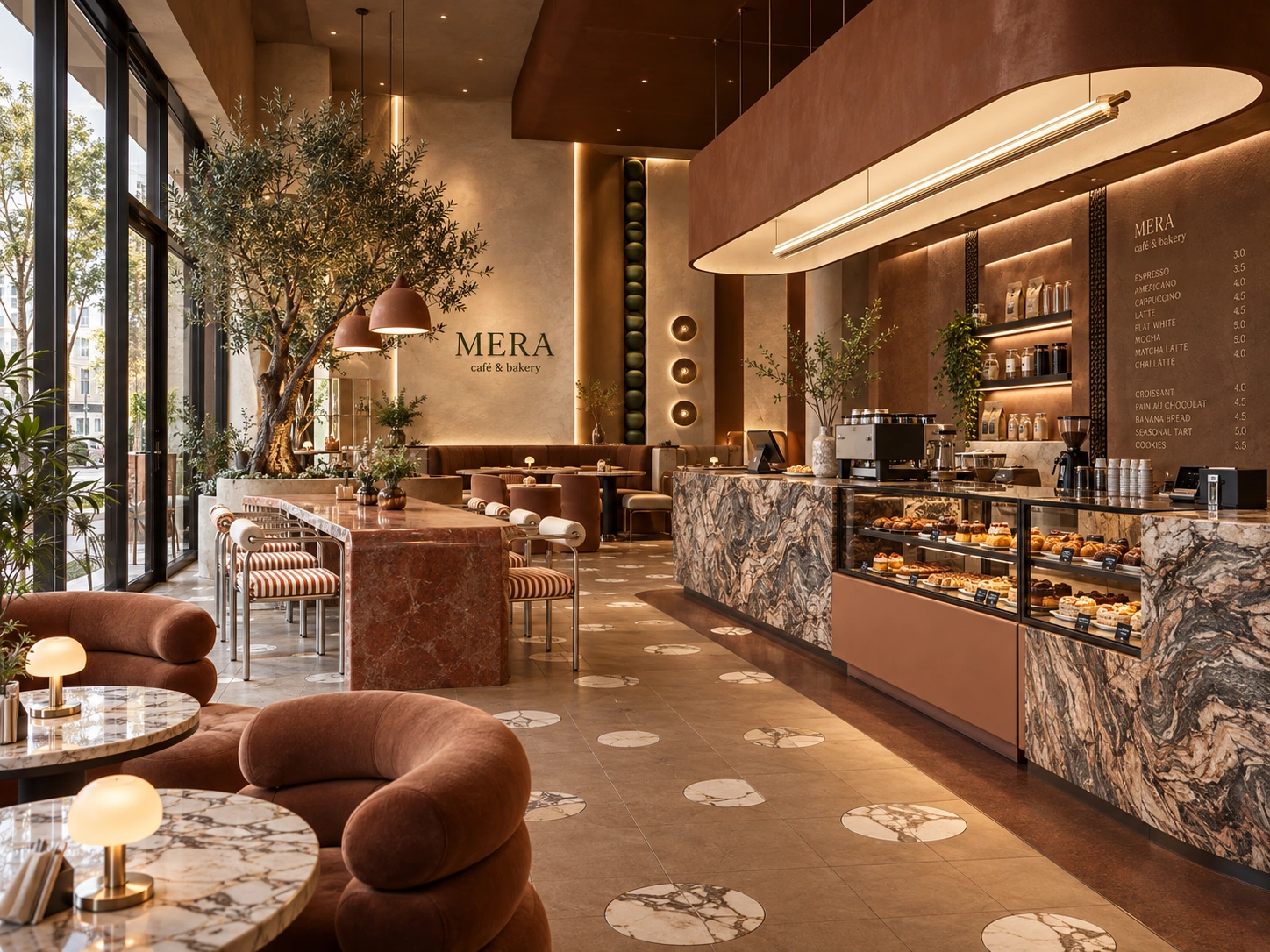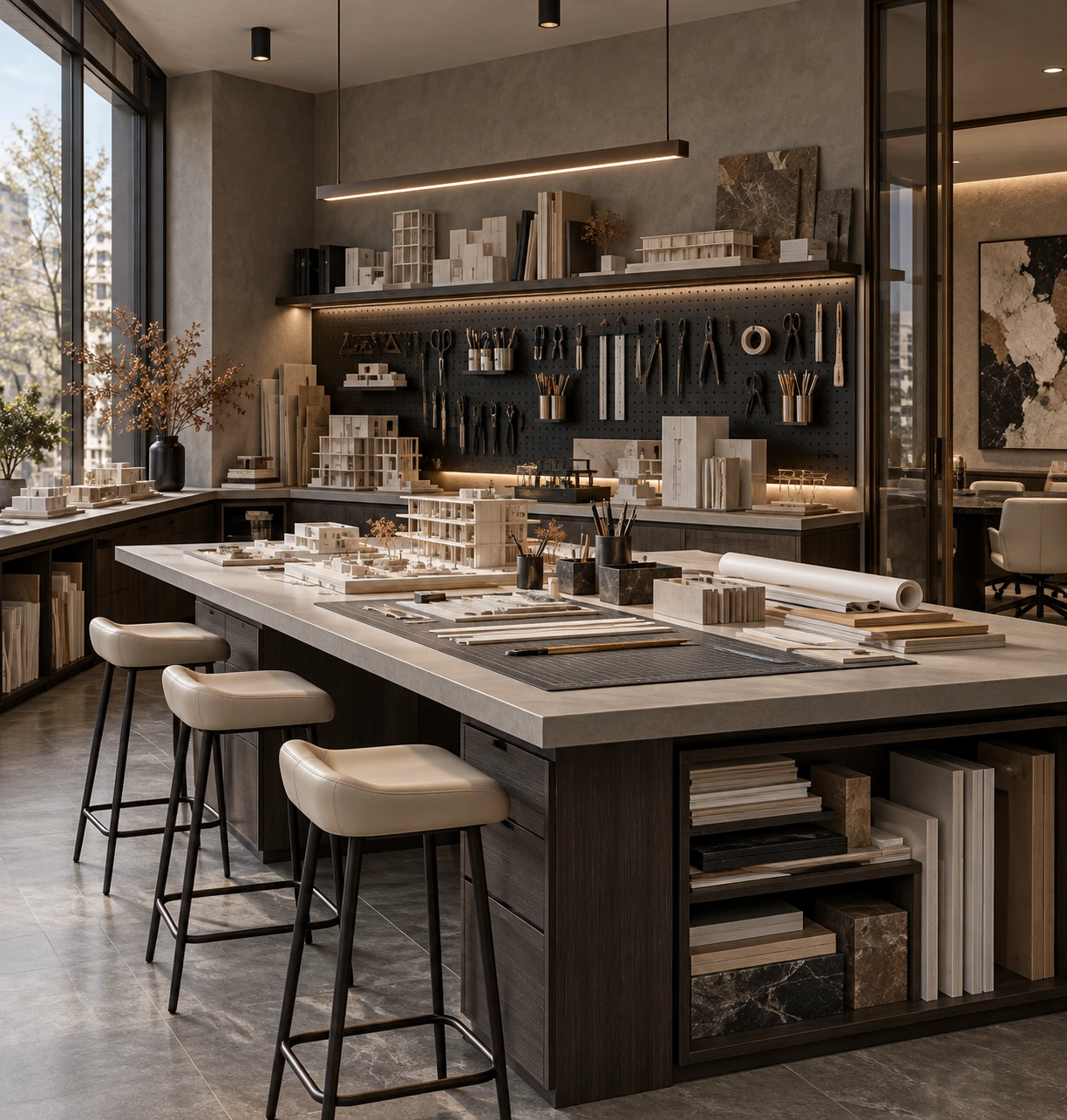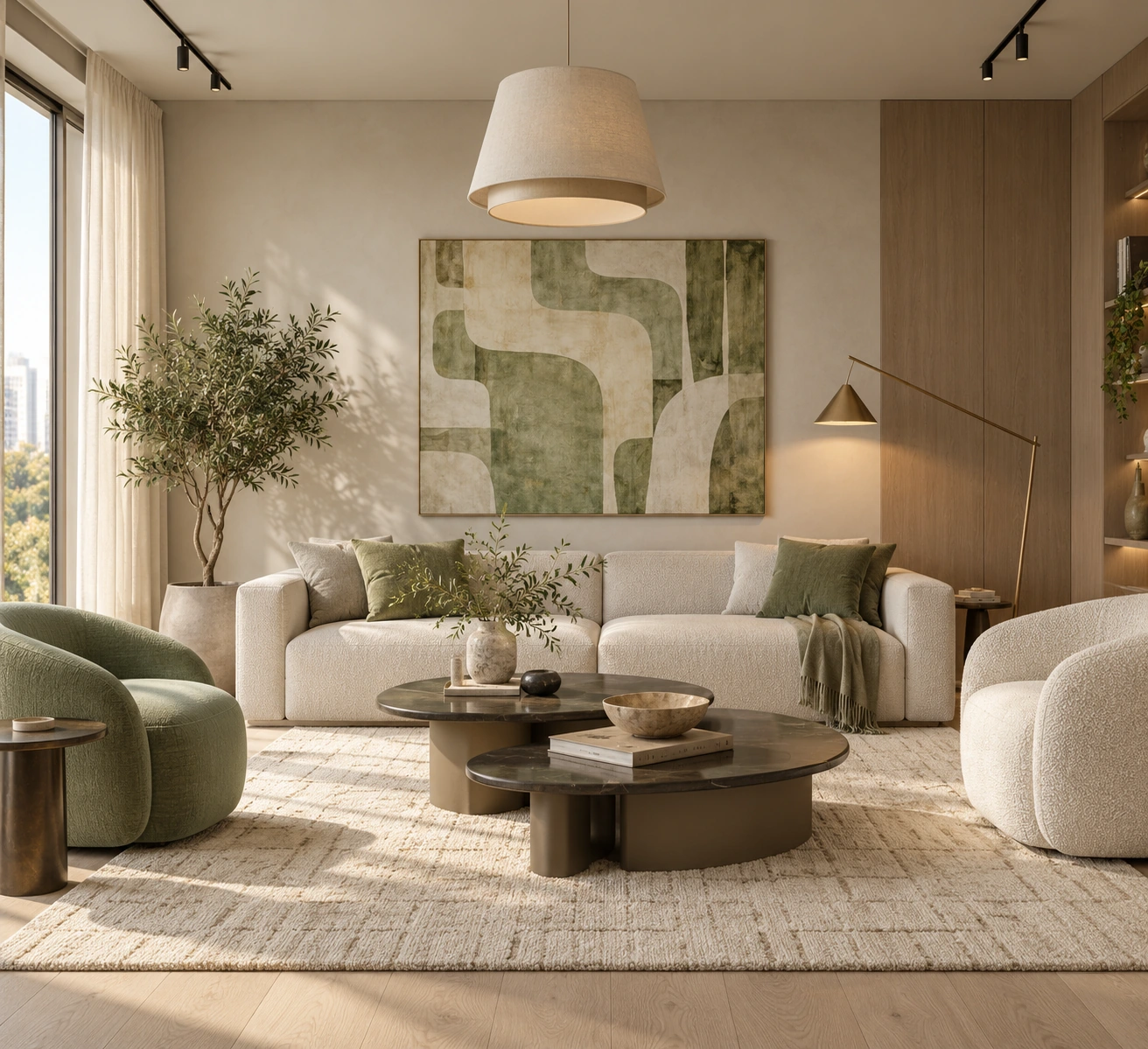
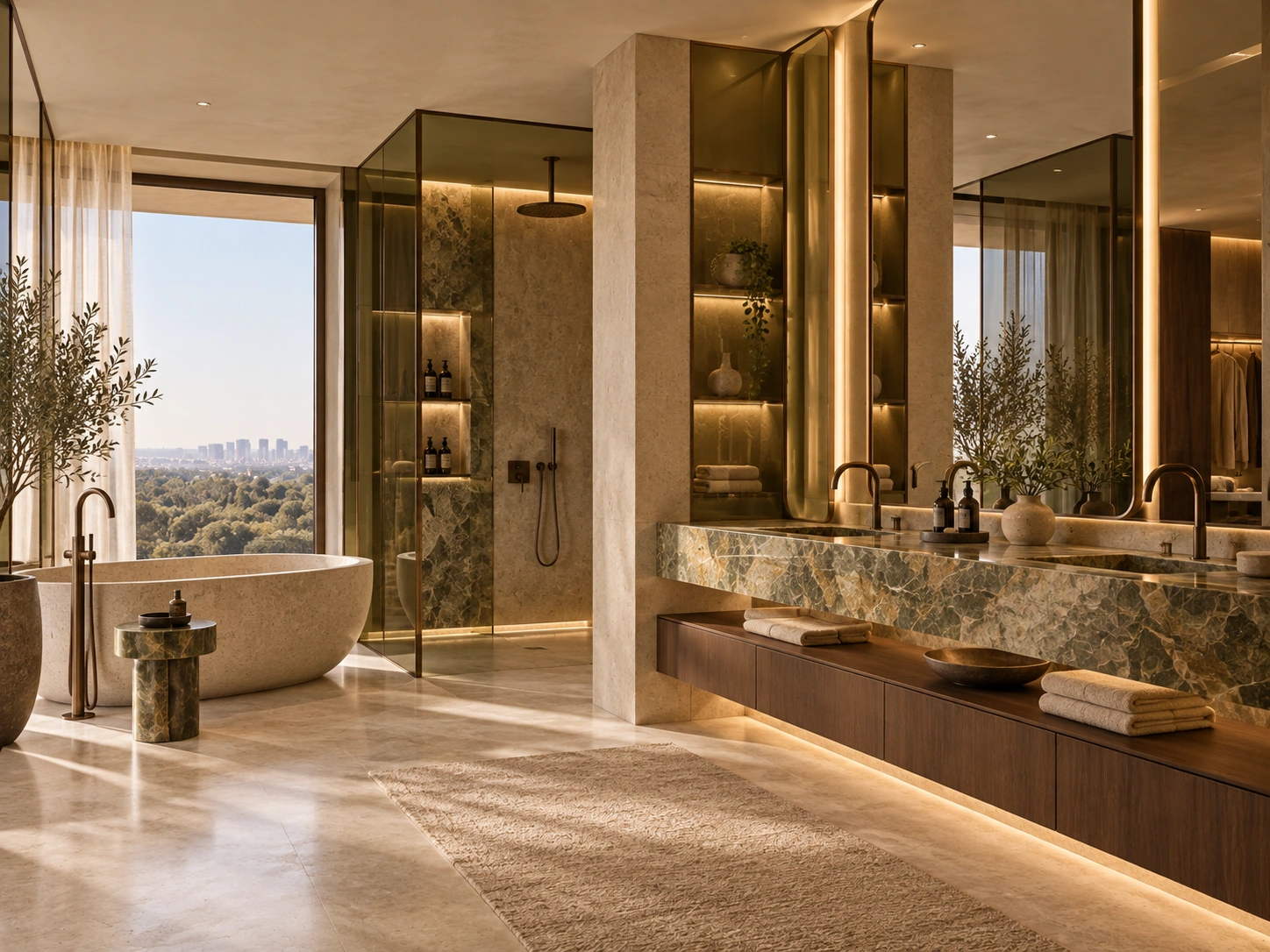
A material palette is a promise about the future of a room. Some surfaces look best on the day they are installed; others improve with use. We are drawn to the second kind.
Stone: weight and memory
Stone carries variation in itself. Veining, tone and small irregularities mean that no two surfaces are identical, and wear tends to add character instead of subtracting it.
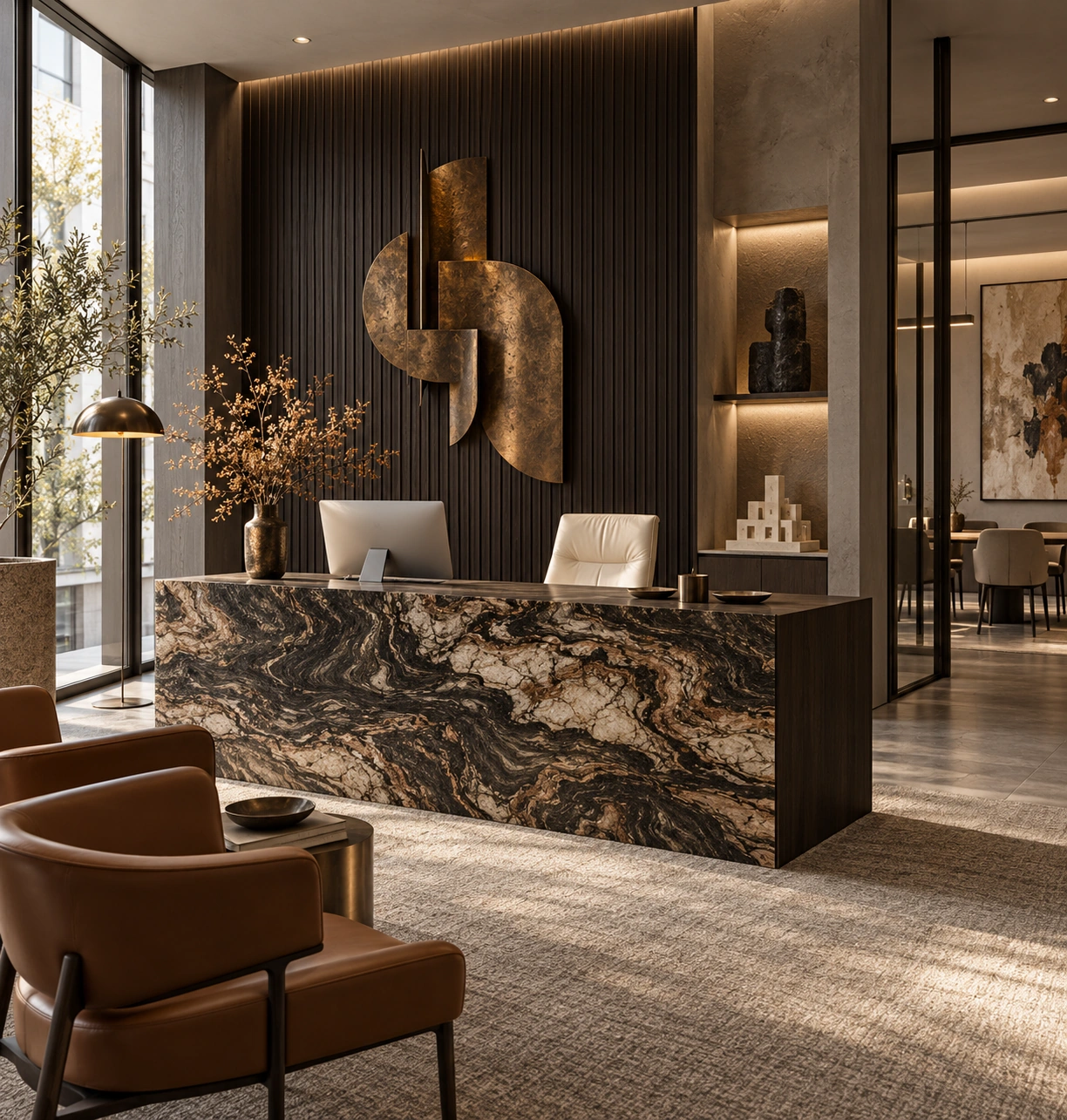
Oak and walnut: the hand
Timber is the surface people touch most. Its grain, its finish and the way edges are rounded decide whether a piece feels considered. Oils and waxes can be renewed; that is part of living with it.
Shadow is a material too
Dark surfaces, recesses and reveals give depth to a palette. A room with only light finishes can read as flat; a controlled amount of shadow gives the other materials something to push against.
Choose materials you would be glad to see again in ten years.