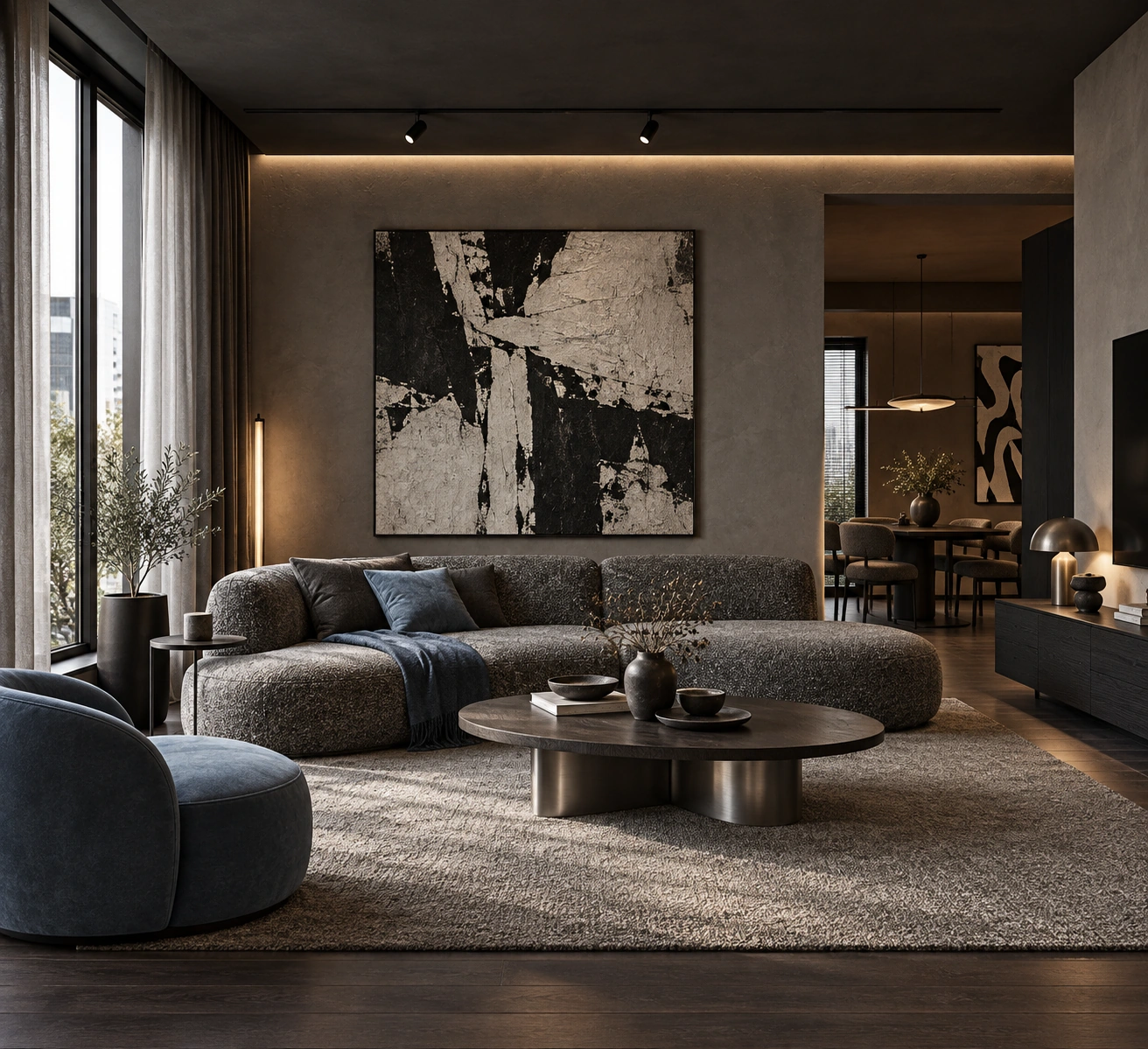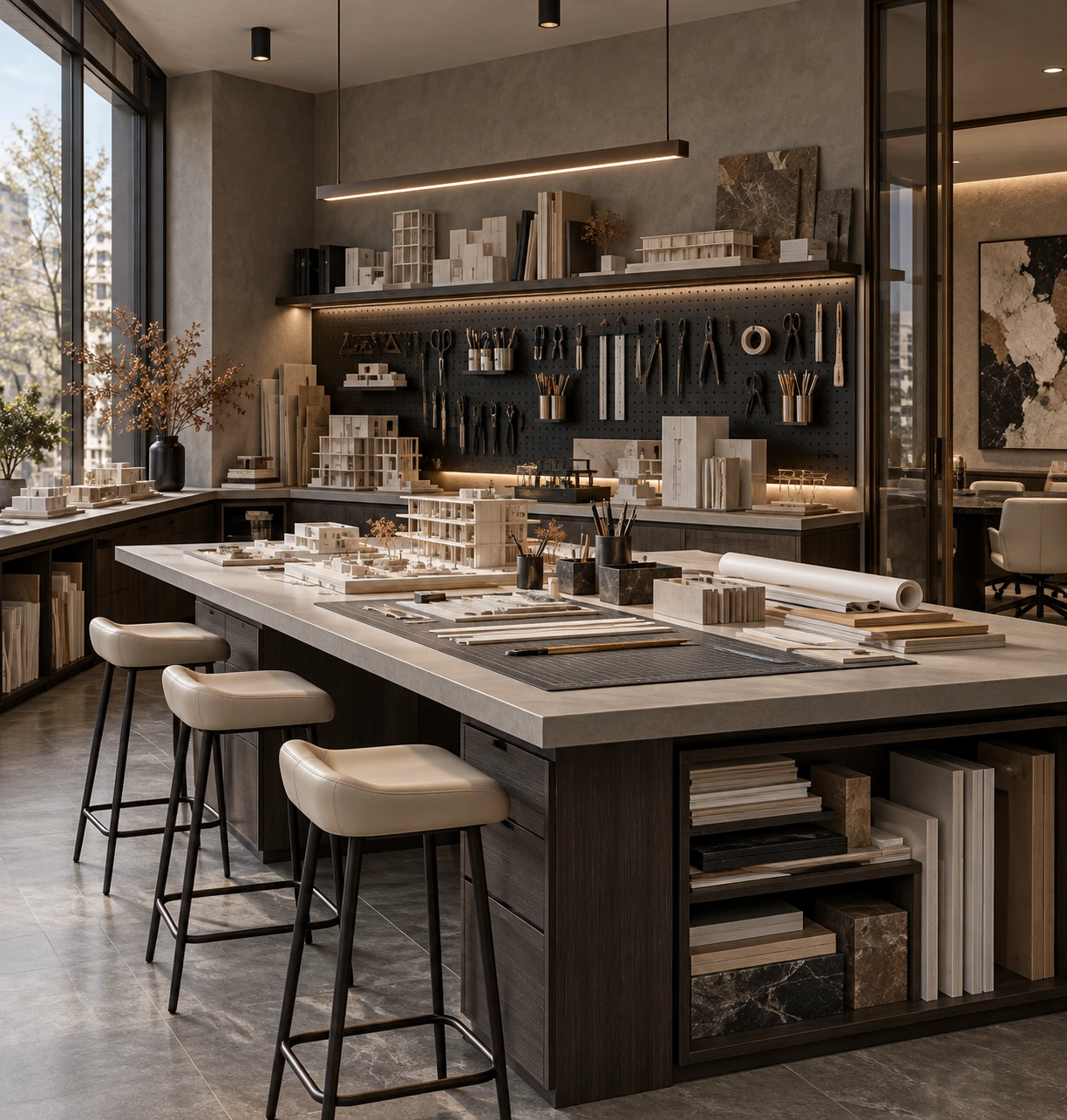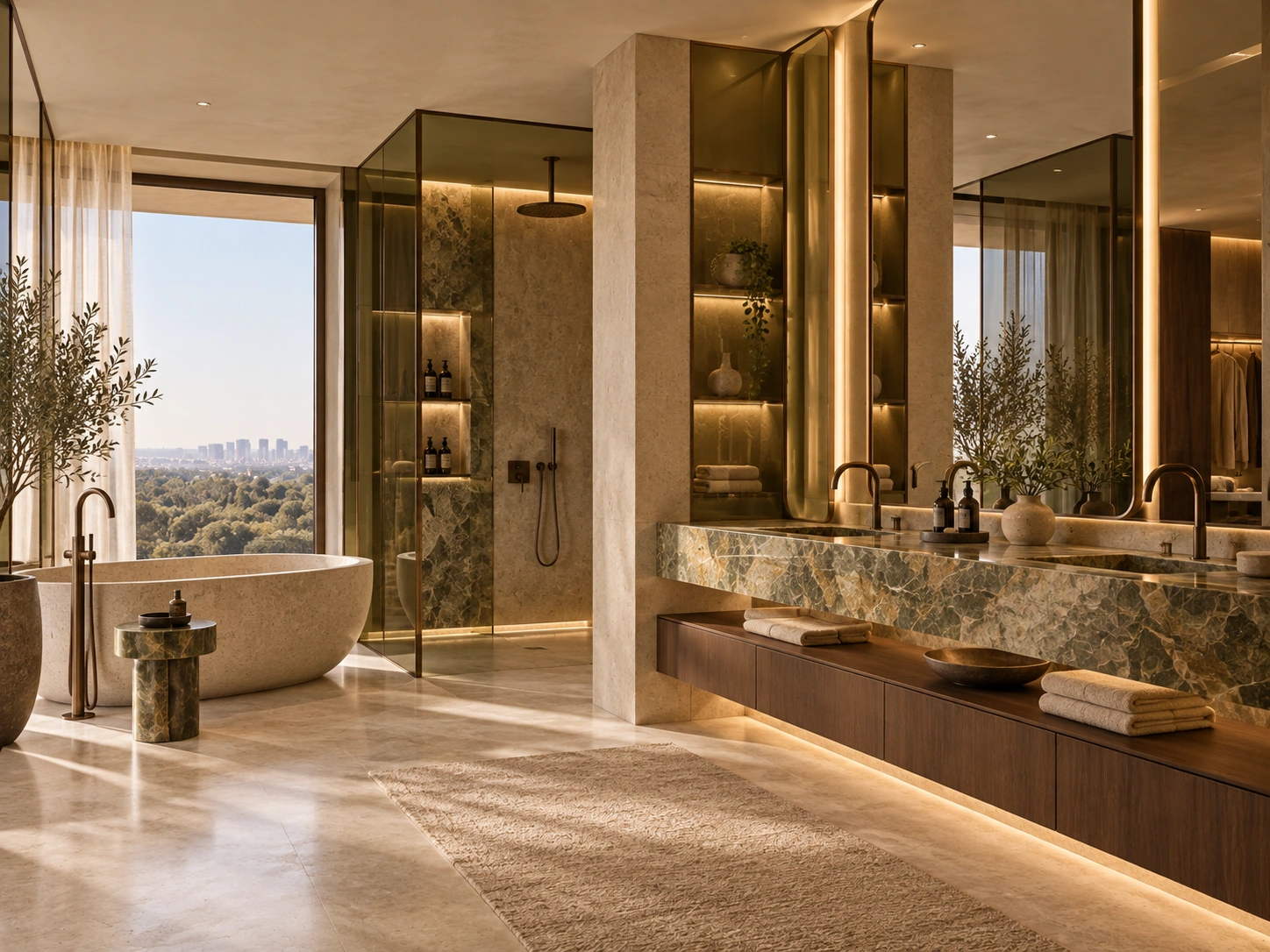
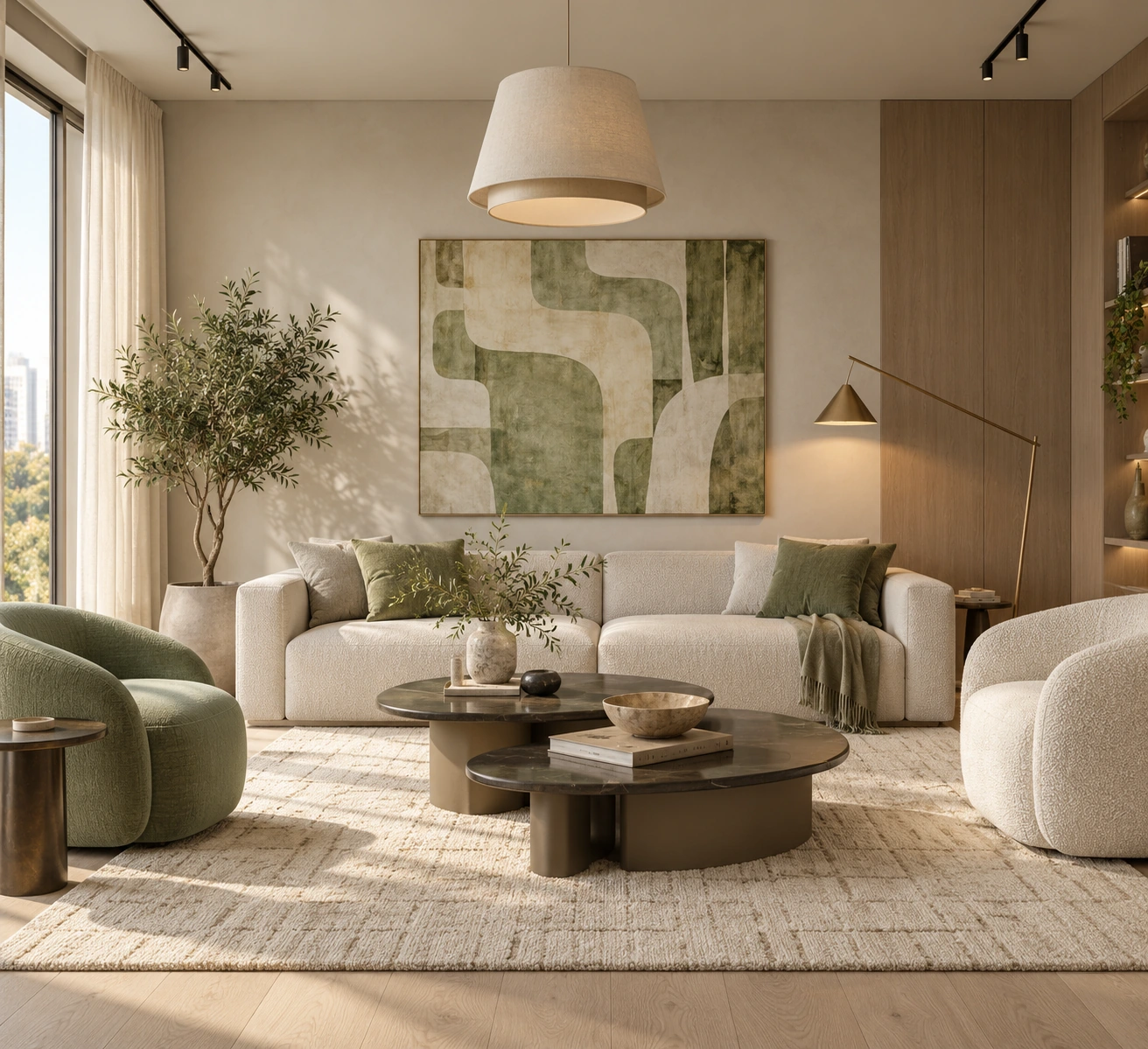
Daylight changes a room more than any finish. It moves across the day and across the seasons, and a space designed with that movement in mind feels different at nine in the morning and at five in the afternoon.
Read the light first
Before drawing, it helps to observe where light enters, how far it travels and where it stops. These observations decide where people sit, where surfaces are placed and which colours are safe.
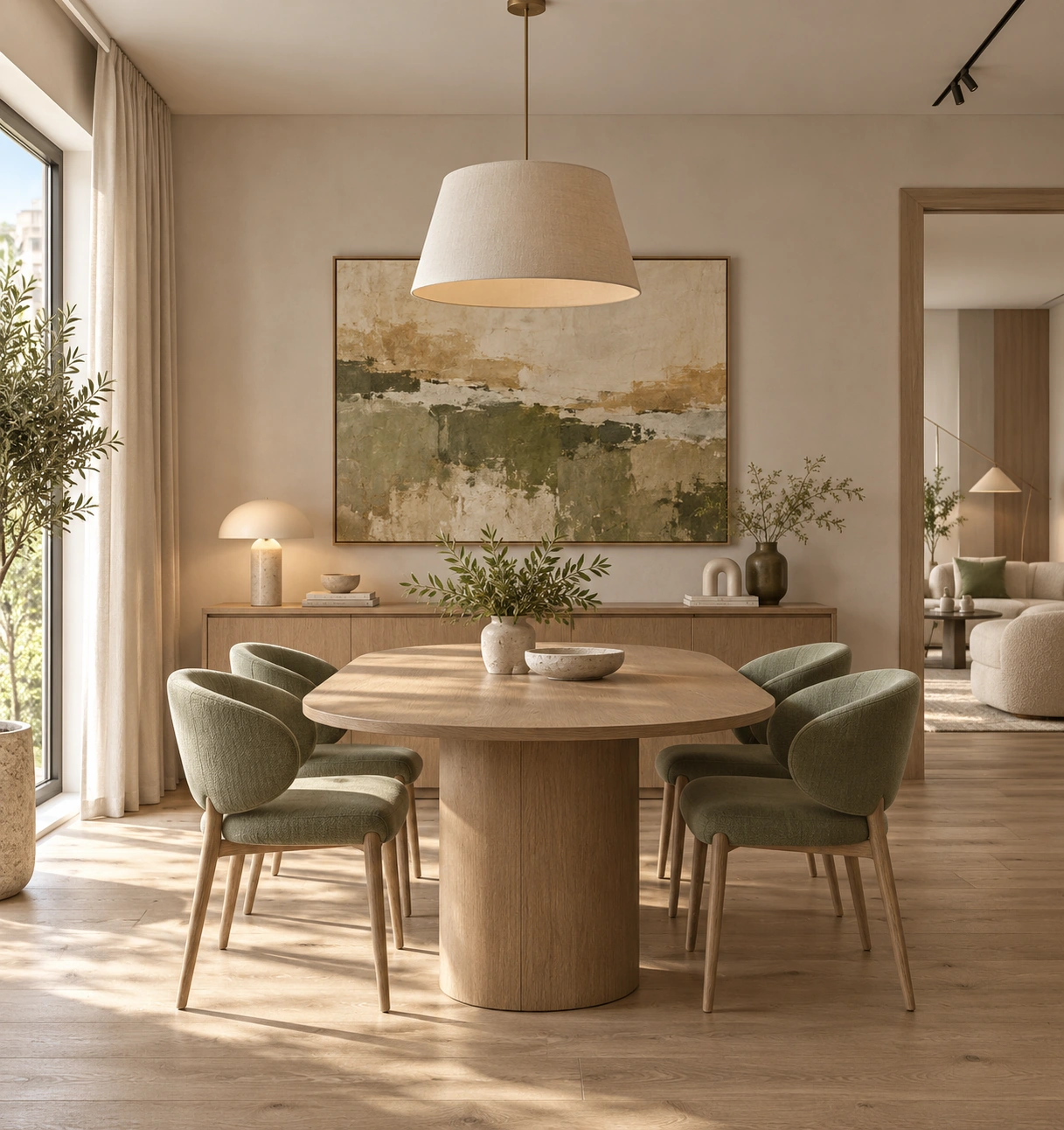
Surfaces that hold light
Matt, textured and slightly absorbent surfaces soften light; glossy ones redirect it. Choosing between them is a way of shaping how bright, calm or dramatic a room will feel.
Artificial light as a second layer
Evening requires its own composition. Lamps at several heights, a few low and warm sources, and one clear focal point let the room stay coherent after dark.
Light is the cheapest structure and the hardest to get right.